

 Image 1 of 1
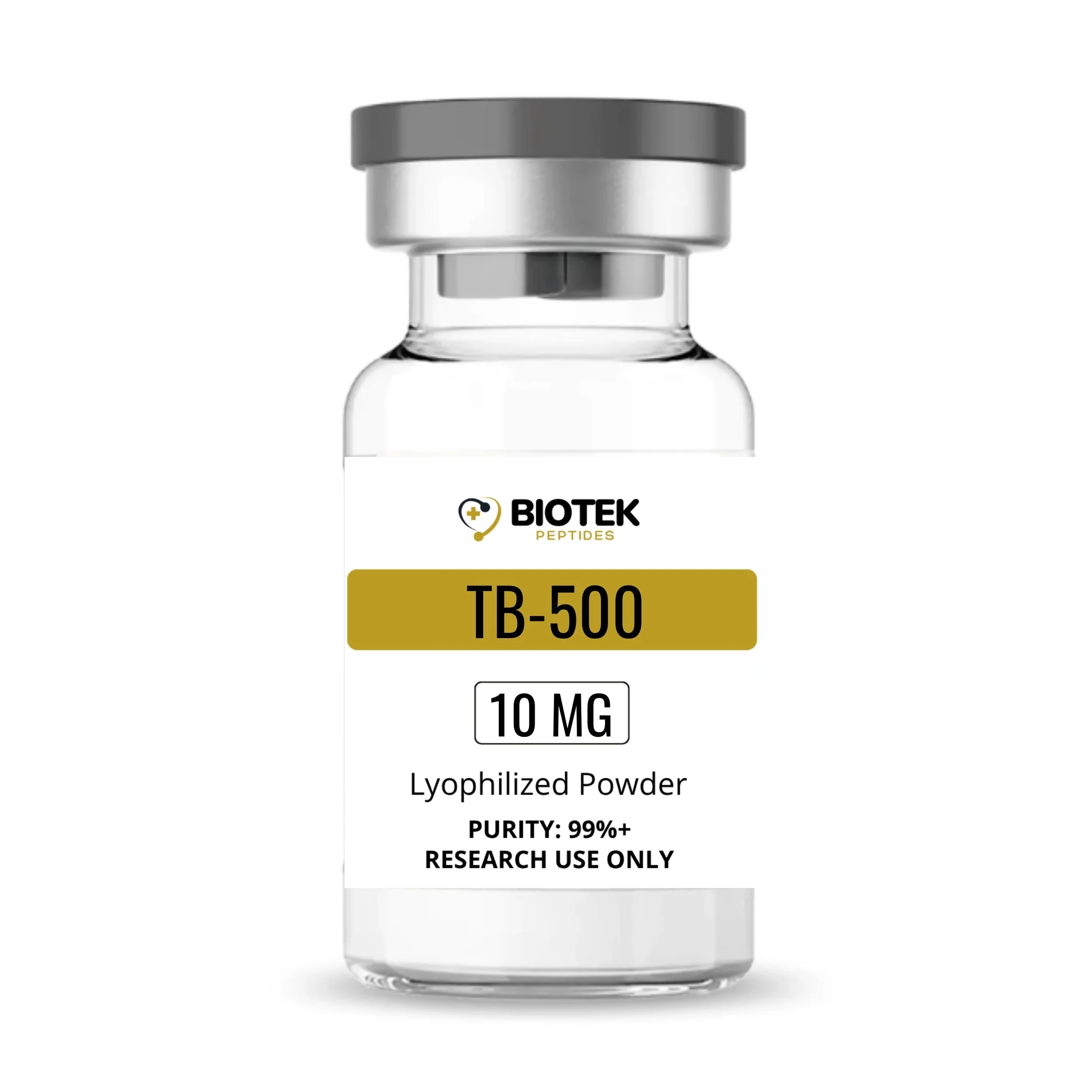
TB-500 is a synthetic peptide modeled after a segment of thymosin beta-4, a naturally occurring protein. In laboratory research, it is used to study tissue repair and regeneration in non-human test models. TB-500 interacts with actin, a protein essential for cell structure and movement, promoting actin regulation and enhancing cell migration—critical processes for tissue healing.
Research has shown that TB-500 can stimulate angiogenesis, the formation of new blood vessels, and modulate inflammation by influencing cytokine activity. It may also help reduce oxidative stress by mitigating the effects of reactive oxygen species (ROS). These mechanisms make it a valuable tool for investigating repair pathways in muscles, tendons, and other connective tissues.
With its low molecular weight and unique amino acid sequence, TB-500 can distribute systemically, selectively targeting areas of injury or inflammation. Its ability to promote regenerative processes has made it a versatile peptide for advanced research, particularly in musculoskeletal, cardiovascular, and epithelial tissue studies. All studies are limited to controlled non-human research, highlighting TB-500’s role as a key investigative tool for exploring tissue repair and cellular dynamics in laboratory settings.