

 Image 1 of 1
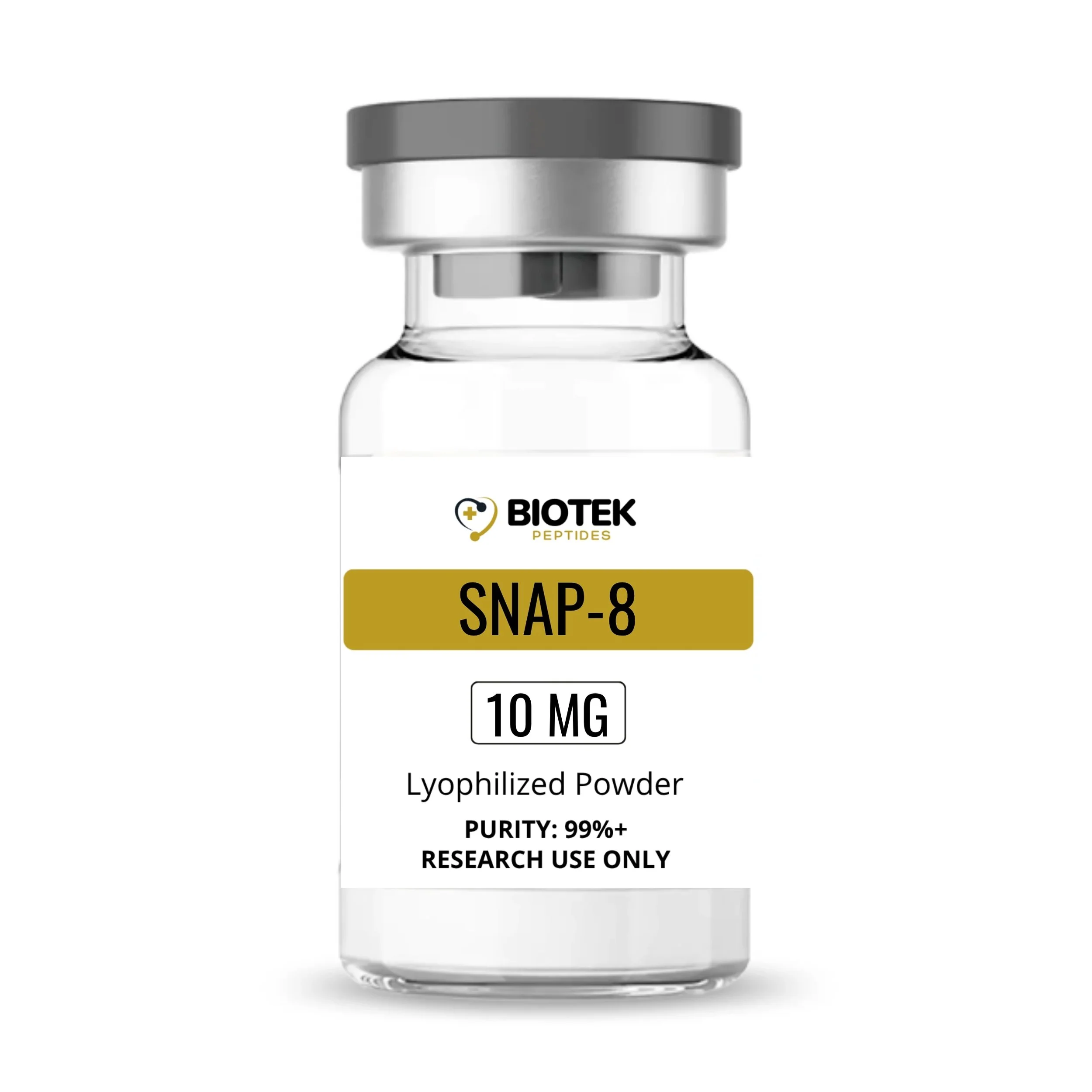
SNAP-8 peptide, also known as Acetyl Glutamyl Heptapeptide-1, is a biomimetic peptide derived from the N-terminal domain of SNAP-25—a key component of the SNARE complex involved in vesicle docking and neurotransmitter release. Its mechanism centers on competitively inhibiting SNARE protein assembly, thereby modulating vesicular fusion and reducing excessive synaptic signaling.
In research settings, SNAP-8 is widely utilized to explore neuromodulation and protein–protein interactions, offering valuable insights into the molecular mechanisms governing neurotransmitter release. Test subjects exposed to SNAP-8 often exhibit altered signaling activity, making it a useful tool for studying synaptic plasticity, cellular stress responses, and oxidative stress pathways.
Due to its high specificity and stability under experimental conditions, SNAP-8 enables precise investigation of intercellular communication and synaptic homeostasis. Its synthetic nature allows for controlled integration into biochemical assays, advancing the study of peptide analogs and their roles in modulating intracellular processes. SNAP-8 remains a prominent compound in research focused on decoding complex molecular interactions within neural and biochemical systems.